



Sayyad-3G: Get to know Iran's new naval missile
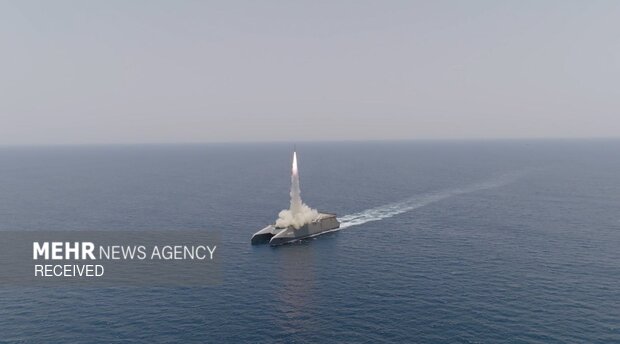
TEHRAN, Feb. 22 (MNA) – Iran has operationally tested its new naval air defense missile, Sayyad 3-G, during military drills in the Strait of Hormuz, expanding the air defense range of its combat fleet to approximately 150 kilometers.
Iran has operationally tested a new naval air defense missile, known as “Sayyad 3-G,” during recent naval drills in the strategically sensitive Strait of Hormuz.
According to Islamic Revolutionary Guard Corps (IRGC) Navy officials, the missile was launched for the first time during the “Smart Control of the Strait of Hormuz” exercise conducted in the region. The system represents the naval variant of Iran’s Sayyad family of air defense missiles and is designed to enhance the layered air defense umbrella of the country’s combat fleet.
The Sayyad 3-G is derived from the land-based Sayyad-3 air defense missile and has been adapted for maritime operations. It is intended to provide medium-range air defense coverage for warships and naval vessels.
The missile is launched from ships via a Vertical Launch System (VLS), enabling rapid response capability and 360-degree coverage against aerial threats.
Its operational range is reported to be approximately 150 kilometers, allowing naval vessels to establish a broader defensive perimeter at sea.
Designed to Counter Multiple Aerial Threats
The system is engineered to intercept a range of airborne targets, including:
Warplanes
Maritime patrol aircraft
High-altitude unmanned aerial vehicles (UAVs)
The missile can operate within an integrated naval command-and-control network while utilizing onboard radar systems of the host vessel. It is also reported to retain independent target detection and tracking capability, enhancing operational flexibility in complex maritime environments.
Adapted for Maritime Conditions
The Sayyad missile family has previously been deployed in Iran’s ground-based air defense systems. The 3G naval variant incorporates technical modifications suited to maritime conditions, including operation from moving platforms in dynamic sea environments.
Deployment of the system on combat vessels — particularly ships of the Shahid (martyr) Soleimani-class warship— is expected to strengthen naval deterrence and expand air defense layers around Iranian maritime assets.
Strategic Significance of the Test
The missile test took place in the Strait of Hormuz, one of the world’s most critical energy transit corridors. Conducting the operational trial in this location underscores the strategic importance Iran assigns to maritime security and defense readiness in surrounding waters.
Iranian officials describe the Sayyad 3-G as another step in the development of a domestically produced, integrated air defense network — a system that has expanded in recent years to include both land-based and naval components.
