



Japan's ruling LDP wins 2/3 lower house majority in boost for PM Takaichi
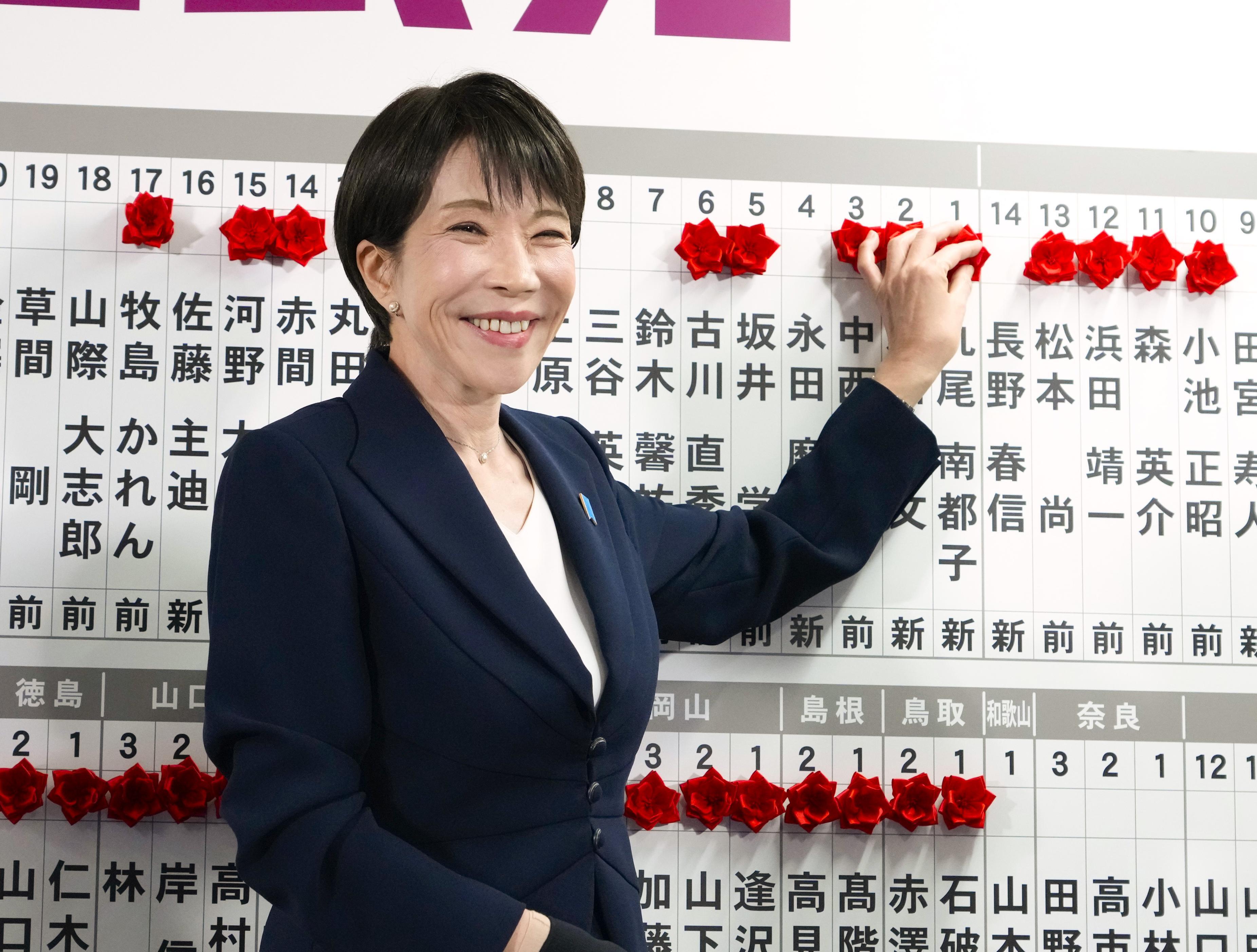
TOKYO, Feb. 9 Kyodo - Japan's ruling Liberal Democratic Party won a two-thirds majority in the House of Representatives in Sunday's election, scoring a landslide victory that will give Prime Minister Sanae Takaichi a major boost in pushing ahead with her conservative policy agenda.
Crossing the two-thirds majority line of 310 seats in the 465-member lower house means the LDP, the first party to achieve the feat in postwar Japan, can move toward amending the Constitution and enact bills even if they are rejected by the House of Councillors, where the ruling coalition remains in a minority.
The sharp gain in seats, from 198 before the election, was apparently made possible by Takaichi's personal popularity, setting the stage for her to stay on as premier after taking office last October. The LDP and its coalition partner, the Japan Innovation Party, will together have a huge presence in the chamber.
The election, meanwhile, dealt a debilitating blow to the newly launched major opposition Centrist Reform Alliance, prompting its co-leaders Yoshihiko Noda and Tetsuo Saito to hint at resigning over an outcome that saw its seats halved from 167 before the election.
Amid prolonged inflation and a growingly severe international environment, Takaichi has promised to pursue a "responsible yet aggressive" fiscal policy and boost the nation's defense capabilities.
"We bear an extremely heavy responsibility to focus on steadily delivering on the campaign pledges we have made," Takaichi said during a TV program after the LDP's victory was reported.
She also signaled, on a separate program, that she will maintain the status quo without making major change to the lineup of the Cabinet, which has received relatively strong public support since its inauguration less than four months ago.
Still, she said she hopes that the JIP, which decided not to take ministerial posts when forming the coalition in apparent reflection of a cautious stance toward the LDP, will fulfill "its responsibility together in the Cabinet."
The JIP, known as Nippon Ishin, lacked momentum compared with its senior ally, although it managed to add one seat to its preelection strength of 34 seats in the lower house. The LDP and the JIP did not coordinate their candidates in the election.
"It was an election in which we felt pressure from the LDP," JIP leader Hirofumi Yoshimura told a press conference in his party's home prefecture of Osaka in western Japan, adding that it had tried to convince voters that it had an important role to play in the coalition in the campaign.
The Sanseito party, a populist group known for its "Japanese First" slogan, won 13 seats, compared with two before the election, while Team Mirai, which advocates adoption of digital technologies to enhance political participation, secured its first seats in the lower house with nine, according to returns.
Nearly 1,300 candidates vied for the 465 seats, with 289 elected from single-seat constituencies and 176 through proportional representation, where seats are allocated for parties based on votes received in 11 regional blocks across Japan.
Early voting received a boost as a record 27.02 million people cast their ballots in the days prior to Sunday, up around 6 million from the previous election in 2024.
Voter turnout stood at 56.23 percent, likely up around 2 percentage points from the previous race, according to an estimate by Kyodo News as of 3 a.m. Monday.
Japan held a general election in February for the first time in 36 years, a move by Takaichi that has drawn criticism because heavy snowfall in many parts of the country made campaigning difficult. Tokyo and its nearby areas also had snow on Sunday.
As ordinary households have been struggling to cope with the rising cost of living, major political parties have pledged to reduce tax burdens on the campaign trail.
Under Takaichi, a security hawk, the ruling parties also sought support for their aim to beef up the country's defenses in the face of an increasingly severe security environment.
The last-minute launch of the Centrist Reform Alliance that united lower house members of the Constitutional Democratic Party of Japan and the Komeito party apparently backfired after facing criticism that their merger was for electoral gain.
Komeito, backed by Japan's largest lay Buddhist organization Soka Gakkai, had been an ally of the LDP for 26 years and a key source of campaign support for their coalition before they split in October.
The previous election in October 2024 proved a watershed moment as the LDP, under Takaichi's predecessor, lost majority control of the chamber with its then coalition partner, the Komeito party.
Takaichi's decision to call a snap election has been criticized for prioritizing political considerations, as it is certain to delay parliamentary enactment of the initial budget for fiscal 2026, which was originally expected by the end of March, ahead of the April start of the fiscal year.
She justified her decision by arguing she had yet to receive public backing for "major policy shifts" planned under her premiership, such as her fiscal stance, and the new ruling coalition formed in October.
Almost all ruling and opposition parties have pushed to suspend or abolish the consumption tax on food products in an effort to counter prolonged inflation.
Takaichi said during her TV appearances that her government will speed up discussions on the plan for a two-year suspension of the 8 percent consumption tax on food, one of her party's campaign pledges.
==Kyodo
