



Population Data at the Core of Iraq’s Development Agenda: UNFPA Annual Review Meeting
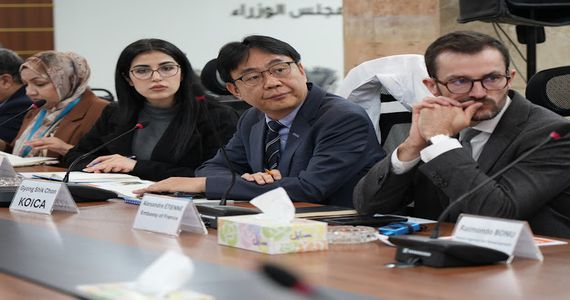
Baghdad and Erbil / NINA /- The United Nations Population Fund (UNFPA) in Iraq, in cooperation with the Ministry of Planning, held its annual program review meeting simultaneously in Baghdad and Erbil for the first time, reflecting a unified national approach to leveraging population data in support of sustainable development pathways.
The meeting witnessed high-level participation from the Office of the Prime Minister, the General Secretariat of the Council of Ministers, and representatives of the Ministries of Planning, Health, Labor and Social Affairs, Youth and Sports, alongside representatives of the Kurdistan Regional Government. It also saw broad attendance by international partners, including the Ambassador of Spain, the Director of the Korea International Cooperation Agency (KOICA), the Head of the UK Foreign, Commonwealth and Development Office (FCDO) in Iraq, and representatives of the Japanese and French embassies, underscoring continued international support for Iraq’s development transition.
Discussions focused on the implementation outcomes of UNFPA programs in 2025, which marked the first year of the Country Programme Document (2025–2029), as well as the strategic priorities for 2026. The meeting followed the completion of the General Population and Housing Census in 2024, the first such census conducted in Iraq in nearly four decades.
The Undersecretary of the Ministry of Planning for Technical Affairs, Maher Johar, reaffirmed the Iraqi government’s commitment to sustaining its partnership with UNFPA, stressing the importance of annual review meetings in assessing performance and outcomes. He noted that the wide participation reflects a shared commitment to supporting the Fund’s strategic directions as a key partner to national institutions.
For her part, UNFPA Representative in Iraq, Hind Jalal, stated that 2025 represented a turning point in the Fund’s work, marking a shift from humanitarian response to strengthening national systems. She emphasized that the census results provide a unique opportunity to formulate evidence-based policies and enable more efficient investments benefiting women, youth, and communities.
The meeting also highlighted key achievements in 2025, including strengthening the use of population data in decision-making, supporting national digital systems, and improving reproductive health services through the rollout of the electronic Logistics Management Information System (eLMIS) in several governorates.
Additional achievements included supporting legal and social frameworks to combat violence and harmful practices against women and girls, and enhancing the integration of youth issues into national programs.
Regarding priorities for 2026, participants agreed on conducting post-census studies, updating the civil registration and vital statistics system, expanding financial protection for women’s and children’s health under the national health insurance system, completing the nationwide scale-up of the eLMIS, and strengthening legal and institutional efforts to ensure the sustainability of protection services.
The meeting concluded with a reaffirmation of the commitment of the Iraqi government, international partners, and United Nations agencies to continued coordination, follow-up, and joint financing, contributing to the achievement of inclusive and sustainable development outcomes during Iraq’s ongoing transformation phase. /End
