



How Washington is setting the stage for global shipping chaos
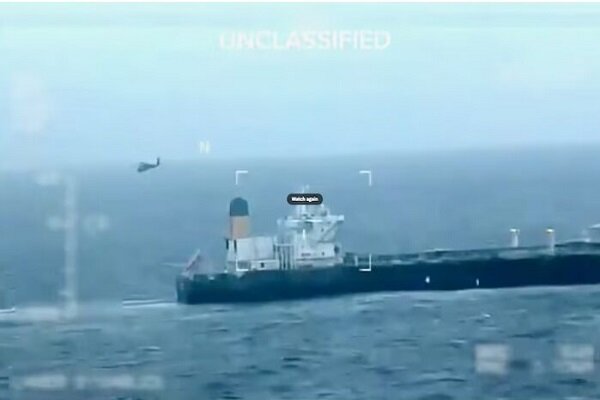
TEHRAN, Dec. 28 (MNA) – Contrary to claims made in American analyses, the main threat to global energy security and international trade is the aggressive and unilateral foreign policy of the United States.
Analyses recently published in American media outlets and think tanks regarding the escalation of maritime pressure on Venezuela reflect less an objective reading of geopolitical realities and more an outdated and dangerous mindset in US foreign policy—a mindset that labels intervention, blockade, and seizure of others’ property not as aggression, but as “law enforcement.” The seizure of the Venezuelan oil tanker Skipper and the effective declaration of an oil blockade against Caracas are portrayed in Washington’s narrative as legitimate actions against the Maduro government. In reality, however, they represent a clear example of the militarization of sanctions and a return to the logic of nineteenth-century maritime colonialism.
In its recent report, the US-based Foundation for Defense of Democracies (FDD) wrote that the United States is blockading sanctioned tankers in Venezuela and Iran deserves the same treatment. The danger of this narrative does not concern Venezuela alone. The authors of the FDD report openly state that this model could be applied against other countries as well. In other words, what is happening today in the Caribbean is a field rehearsal for a scenario that could tomorrow be pursued in the Persian Gulf or the Sea of Oman.
The Law Enforcement Show and the State Piracy Reality
The American narrative seeks to frame tanker seizures within the context of “sanctions enforcement” and “counter-smuggling,” but this framework is deeply flawed under international law. Unilateral US sanctions, even if considered legitimate by Washington, lack any binding legal basis at the international level. No UN Security Council resolution has authorized the United States to seize vessels on the high seas or in the territorial waters of other countries.
What the US is doing is not law enforcement, but the imposition of will through military force. There is a fundamental difference between combating piracy and committing piracy itself. When a military power confiscates the property of a sovereign state without international authorization, it places itself precisely in the position of the pirate it claims to be fighting.
Militarizing Sanctions: A Dangerous Crossing of Red Lines
In classical international relations literature, sanctions are viewed as economic and diplomatic tools. What the US is pursuing against Venezuela, however, is the transformation of sanctions into a direct military instrument. The deployment of aircraft carriers, destroyers, and marine units alongside tanker seizures clearly shows that Washington has moved beyond economic pressure and entered the phase of an undeclared military blockade.
This trend has implications far beyond Venezuela. If any country is allowed to endanger international shipping lanes based on its own domestic sanctions, the foundations of global trade will collapse. Energy security—the lifeline of the global economy—will become a tool in the hands of military powers, a trajectory that will inevitably lead to greater instability and wider conflicts.
The “Illegitimate Regime” Narrative: A Tool to Justify Intervention
In American analyses, Venezuela is portrayed not as a sovereign state but as the “Maduro regime”—a label with a clear function: delegitimization to justify pressure, sanctions, and ultimately intervention. This pattern has previously been used in Iraq, Libya, Syria, and even Iran.
The US positions itself as the arbiter of governmental legitimacy, disregarding election outcomes, domestic legal structures, and the principle of national sovereignty. Meanwhile, many US allies across regions lack even minimal democratic standards, yet never face comparable pressure. The real criterion of legitimacy is not the will of the people, but the degree of compliance with Washington.
Oil as a Lifeline: Economic Warfare Against the People
American analyses explicitly state that cutting oil exports could lead to the “financial collapse of the Maduro regime.” What is deliberately ignored is the reality that economic collapse primarily targets ordinary people. Oil sanctions and blockades do not pressure political elites; they impact workers, patients, the elderly, and children.
The experiences of Iran, Iraq, and Venezuela show that economic warfare is not a tool for changing government behavior, but a weapon for collective punishment of nations. The US continues down this path with full awareness of its consequences, then attributes the resulting humanitarian crises to “domestic mismanagement.”
The Shadow Fleet: A Product of Sanctions, Not an Inherent Crime
One of the key focuses of the FDD analysis is the so-called “shadow fleet”—a network of vessels operating to circumvent sanctions. The fundamental question, however, is this: if illegal sanctions did not exist, would such a fleet emerge at all? The shadow fleet is a direct product of US sanctions policy. When official trade routes are closed, the global economy is pushed toward informal channels. The US first blocks legal pathways, then presents their inevitable outcome as a “security threat.” This is a vicious cycle that is consciously reproduced.
Venezuela as a Testing Ground; Iran as the Ultimate Target
The most dangerous part of the FDD analysis is its explicit reference to modeling this approach for Iran. This admission shows that Washington’s objective is not merely pressure on Venezuela, but the creation of a new precedent for confronting independent countries.
If the seizure of Venezuelan oil tankers becomes normalized, tomorrow the seizure of vessels belonging to other countries, including Iran, will be justified using the same logic. This trajectory poses a serious threat to security in the Persian Gulf and could bring the world to the brink of direct maritime confrontations. Responsibility for such a situation lies squarely with policymakers who have chosen force over diplomacy.
The Illusion of Effectiveness: The Failed Record of Sanctions
American analyses assume that blockades and seizures will ultimately lead to political submission. This assumption has repeatedly failed in practice. Neither crippling sanctions against Iran led to regime change, nor the blockade of Cuba, nor maximum pressure on Venezuela.
What has changed is not state behavior, but the level of distrust toward the United States among nations. Sanctions have contributed to the strengthening of resistance economies, the expansion of South-South cooperation, and reduced dependence on Western financial systems—trends that ultimately weaken US global standing.
Conclusion
Contrary to American claims, the main threat to global energy security and international trade is neither Venezuela, nor Iran, nor the “shadow fleet,” but the aggressive and unilateral foreign policy of the United States. Maritime blockades, tanker seizures, and the militarization of sanctions are pushing the world toward greater instability.
What is happening today in the Caribbean, if left unchecked, will be repeated tomorrow in other vital waterways. With this approach, the US neither preserves international order nor enforces the law; rather, it becomes the greatest violator of the very order it claims to defend.
