



Thailand’s Ballot Codes Spark Voter Secrecy Concerns
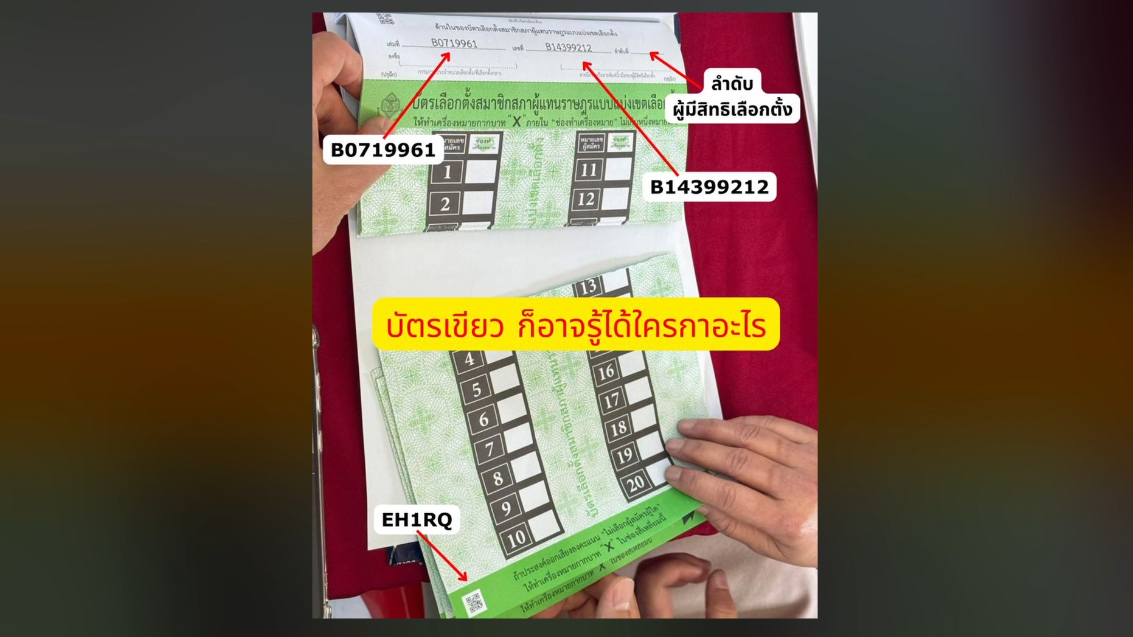
BANGKOK, Feb 13 (TNA) - Questions over the secrecy of Thailand’s election ballots have emerged after tech experts and netizens raised concerns that barcodes and QR codes on the ballot cards could potentially be used to trace individual votes back to specific voters.
The controversy centers on whether unique serial numbers on the green constituency ballots and pink party-list ballots are mathematically linked to the ballot stubs kept by election officials.
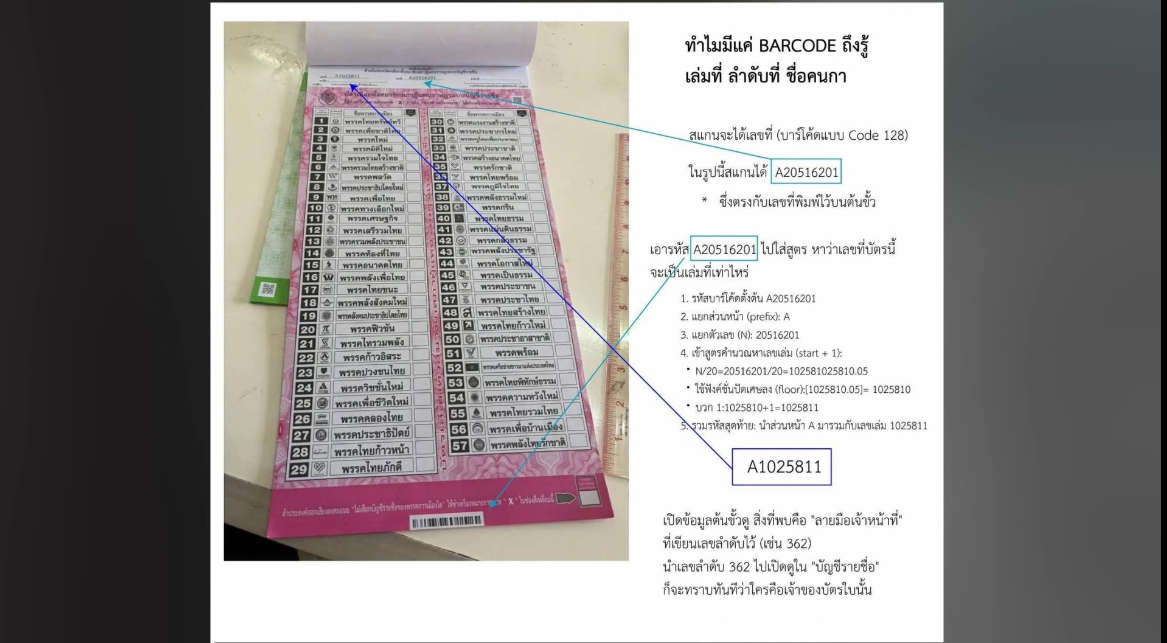
IT experts claim that by scanning the barcode and applying a specific formula—dividing the serial number by the number of cards per book (20)—the resulting digits could identify the specific book and sequence number assigned to a voter at the polling station.
This linkage, critics argue, could allow authorities to match a marked ballot with the voter’s name and address, potentially violating constitutional requirements for a secret ballot.
The Election Commission (EC) has moved to dismiss these claims.
"This is a misunderstanding," said Pasakorn Siriphakayaporn, Deputy Secretary-General of the EC, during a press briefing. "The barcodes are a security measure to track the batch and polling station. It is a high-level control measure to ensure the origin of the ballots, not to identify how anyone voted. I confirm this."
Despite the official clarification, public skepticism remains. Social media users have pointed out a discrepancy in the security measures: while the green and pink election ballots contain these codes, yellow referendum ballots reportedly do not feature any barcodes or QR codes.
Meanwhile, Pheu Thai Party is gathering evidence on ballot barcodes to determine if they compromise ballot secrecy and could potentially void the election.
