



Carbon credits - New resource for forest protection
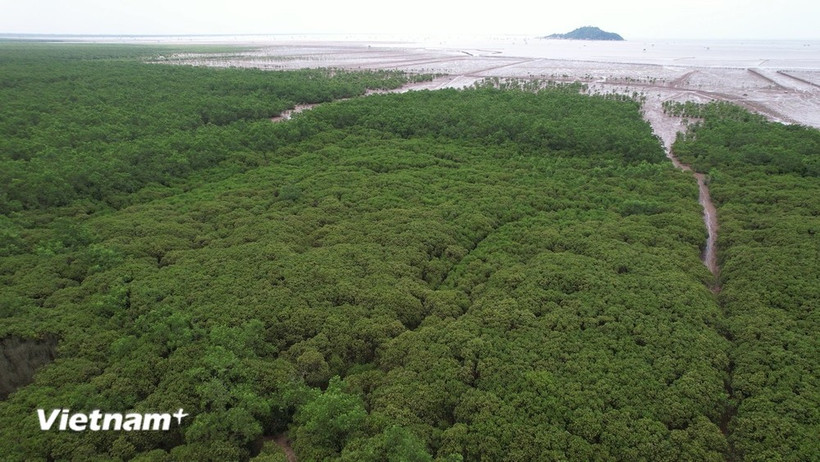
Quang Tri, January 30 (VNA) - Revenue generated from forest carbon credits is opening up a new approach to forest protection and development in the central province of Quang Tri.
Through the Emission Reductions Payment Agreement (ERPA) for the north central region, hundreds of billions of dong have been allocated, helping link forest conservation with sustainable livelihoods for communities in mountainous areas.
Linking forest protection with livelihood improvement
With more than 841,000 hectares of forest and a forest coverage rate exceeding 61%, Quang Tri is among the provinces with the largest forested areas and carbon stocks in the north central region. Beyond their ecological and environmental value, these forests are gradually being transformed into an economic resource through payments for greenhouse gas emission reductions from forests - a new pathway for sustainable forest management, protection and development.
As one of five provinces benefiting from ERPA during the 2023–2025 period, Quang Tri has been allocated more than 364 billion VND (14 million USD) of the central budget, based on verified emission reduction results and the area of natural forests under protection.
To date, over 349 billion VND, equivalent to more than 95% of the plan, has been disbursed to State-assigned forest owners, including forest management boards, agro-forestry companies, communal authorities, armed forces units, enterprises, households, and individuals.
According to Tran Quoc Tuan, Director of the provincial Department of Agriculture and Environment, Quang Tri currently has more than 596,000 hectares of natural forest and nearly 245,000 hectares of planted forest. These forests represent a valuable “green asset” as Vietnam pursues its commitment to achieving net-zero emissions by 2050.
Traditionally, forest value has been measured mainly through timber and forest products. ERPA has introduced a new approach by recognising forests’ capacity to absorb and store carbon as a payable environmental service, directly linking forest protection responsibilities with economic benefits for forest managers and local communities.
ERPA revenue has provided an important financial supplement for forest protection and development. Funds have been used for emission reduction activities, direct protection of natural forests, prevention of deforestation and forest degradation, silvicultural measures, forest patrols, wildfire prevention and control, and capacity building for forest management, said Tuan.
After three years of pilot implementation, ERPA payments in Quang Tri have been carried out transparently and in line with regulations. Income from forest carbon has contributed to improving livelihoods and increasing incomes for communities, households and grassroots authorities directly involved in forest protection.
The programme has also helped maintain stable natural forest areas, protect ecosystems and keep the province’s forest coverage at 61.47%, creating a foundation for sustainable socio-economic development in mountainous and remote areas, the official added.
According to emission reduction assessments for the region, Quang Tri achieved net emission reductions of more than 7.3 million tonnes of carbon, of which 3.4 million tonnes were transferred to the World Bank - the highest among participating localities. Overall, the programme transferred 10.3 million tonnes of carbon, generating financial resources worth 51.5 million USD.
Recently, the Government approved an additional transfer of one million tonnes of carbon, equivalent to 5 million USD, for distribution to North Central provinces, including Quang Tri. The province is currently implementing payments in line with Decree No. 107/2022/ND-CP, with additional funding exceeding 37.9 billion VND.
Thai Van Son, Director of the Thach Han River Basin Protection Forest Management Board, said ERPA has placed strong emphasis on supporting local livelihoods. Many forest owners have used the funds to contract forest protection tasks to communities living near forest areas, creating jobs, raising incomes and improving on-site forest protection effectiveness.
Challenges remain
Despite positive results, challenges remain. Tuan noted that the legal framework for the carbon market and forest carbon credits is still being refined, with key issues such as ownership rights, benefit-sharing mechanisms and links between domestic and international carbon markets yet to be fully clarified.
In addition, forest carbon projects require robust measurement, reporting and verification systems that meet international standards, while initial investment resources and technical capacity remain limited.
In the future, the province will focus on strictly protecting existing forests, boosting forest quality and carbon storage, enhancing monitoring systems, and encouraging sustainable forest management along with forest certification.
Effective ERPA implementation is contributing to Vietnam’s climate commitments while opening a new pathway for forestry economics, linking forest protection with sustainable livelihood improvement and long-term development goals.-VNA
